
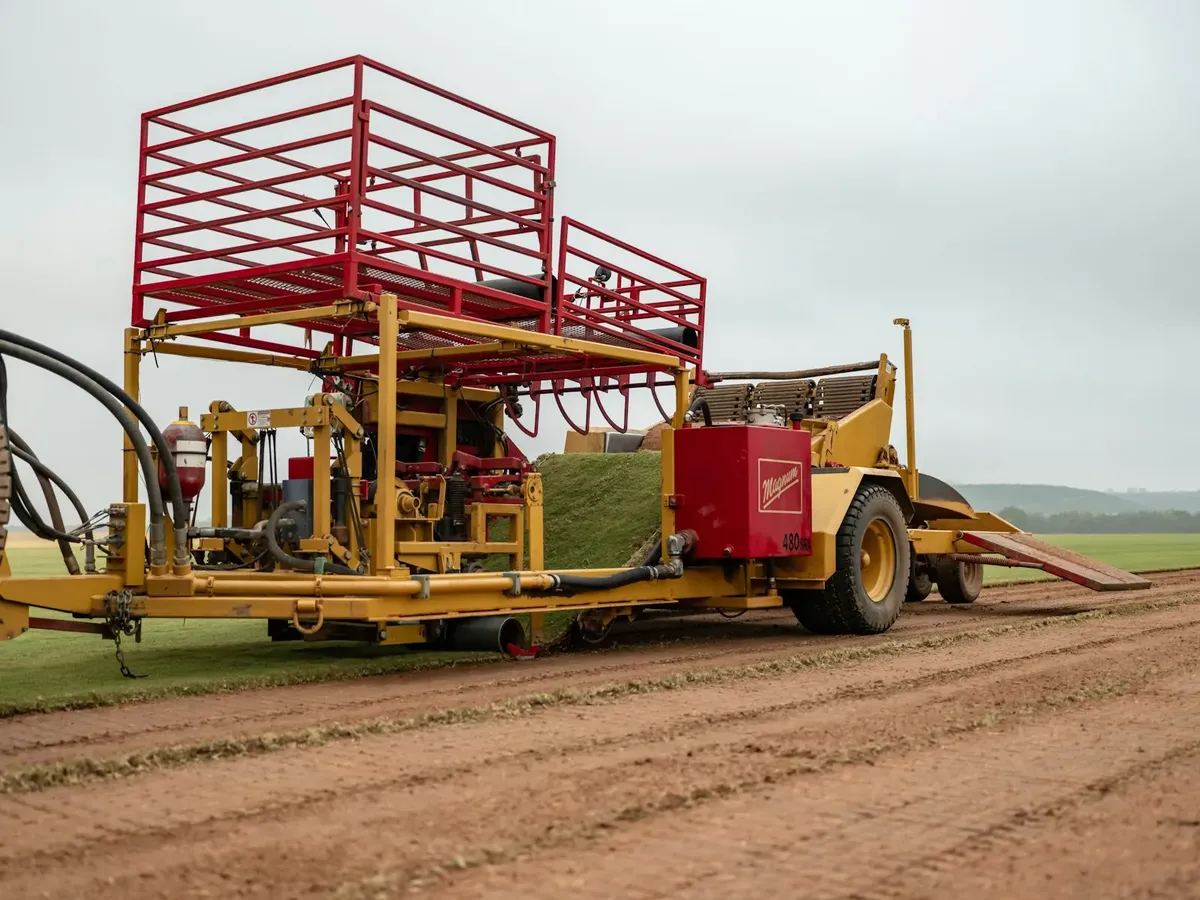
St. Augustine Sod in Lakeland Comes in More Than One Kind
Ask for St. Augustine at most farm counters and you get Floratam. It is the most widely produced St. Augustine in Florida, released by the University of Florida and Texas A&M in 1973, and it is a tough, coarse grass in full sun. It is also the reason so many shaded Lakeland yards have thin, patchy turf under the oaks. Give Floratam fewer than six hours of direct sun and, according to UF/IFAS, it simply does not last. Extra water and fertilizer will not change that.
The fix is not a different species. It is a different cultivar of the same grass. Several St. Augustines handle shade far better than Floratam, and they install, mow and look much the same. The work is figuring out how much light each part of the yard really gets, then putting the right grass in the right spot, even if that means two cultivars on one lot.
St. Augustine Grass for Lakeland Yards: Count Your Sun Hours First
Before anything gets ordered, spend one clear day noting when each part of the lawn is in direct sun. Morning light from the east, a gap in the canopy at noon, and the shadow a two-story house throws across the side yard all count. Then sort the yard into three groups.
- Six or more hours of direct sun: Floratam is the value pick. CitraBlue also does well here.
- Roughly four to six hours, or bright filtered light: CitraBlue, ProVista, Palmetto or Seville.
- Dense, all-day shade: no lawn grass thrives. A bed of mulch or pine straw under the canopy usually looks better and costs less to keep.
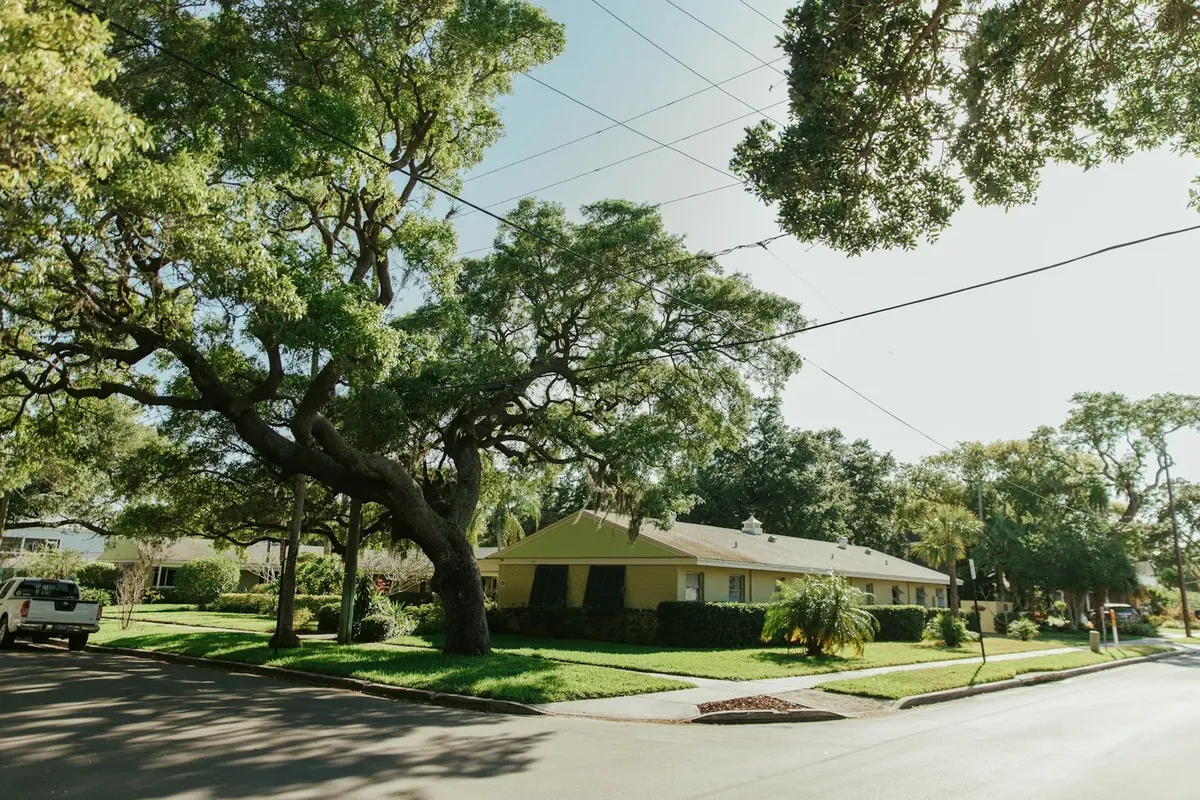
This matters most in the older parts of town. Under the oak canopy around Lake Hollingsworth and Dixieland or Lake Morton, a sunny front strip and a shaded side yard can sit 20 feet apart. Newer subdivisions with young trees, like many in South Lakeland, tend to be Floratam country for now.
St. Augustine Cultivars Sold Around Lakeland
Floratam
Coarse blades, fast growth and the lowest price of the group. Its weaknesses are poor shade and cold tolerance. Its original resistance to chinch bugs has largely been lost, so chinch bugs are now a major pest of it, and it can get gray leaf spot in summer. On the plus side, its thick roots make it relatively tolerant of sting nematodes, which matters on the deep sands of the Lakeland Ridge.
CitraBlue
A newer UF release, on the market since 2018. It has a blue-green color and denser, flatter growth that competes with weeds better than Floratam. UF/IFAS rates it more drought tolerant than Floratam, Palmetto and Raleigh, and it appears on UF's list of the more shade-tolerant St. Augustines. It can be mowed a bit lower, though it may build thatch if pushed.
ProVista
Built on Floratam genetics, with a darker green color, better shade tolerance and slower growth. It was also the first glyphosate-tolerant turfgrass, which changes how weeds can be managed in it. Slower growth means a little less mowing.
Palmetto
A solid choice where the yard mixes full sun and partial shade. UF/IFAS is clear that it is not a grass for dense shade.
Seville
A dwarf St. Augustine with fine, dark green blades that does well in both shade and full sun. It is cold sensitive, prone to thatch, and more open to chinch bugs and webworms. It is also the one St. Augustine on this list mowed short, at 2 to 2.5 inches.
In a deed-restricted neighborhood, run the cultivar past the architectural committee before ordering. Associations can require approval, but Florida statute bars them from prohibiting Florida-friendly landscaping, and during the water shortage SWFWMD says an HOA cannot enforce rules that push owners to replace plant material for looks. A shade cultivar where Floratam keeps failing is usually an easy approval.
St. Augustine Sod Prices in Lakeland
Shade cultivars cost more per foot because fewer farms grow them, and shaded sections tend to be small, oddly shaped pieces that take longer to cut and fit. Typical Lakeland-area ranges, not quotes:
| Job | Typical range | What moves the price |
|---|---|---|
| Floratam, installed | $1.30–$2.00 per sq ft | Square footage, soil prep, access |
| CitraBlue, ProVista, Palmetto or Seville, installed | $1.60–$2.50 per sq ft | Cultivar supply, number of small shaded sections |
| 1,000 sq ft of Floratam, no removal | $1,300–$2,000 | Amendments, irrigation repairs, gate width |
| Pallet of Floratam (400–500 sq ft), material only | $190–$350 | Pallet size, farm, pickup or delivery |
| Removing the old lawn first | $0.50–$1.25 per sq ft | Root mat depth, weeds, haul-off volume |
A yard split between Floratam in the sun and a shade cultivar under the trees often costs less than doing the whole lot in a shade type, and it performs better than Floratam everywhere. If your current lawn is dying out in the shade, sod removal and replacement covers stripping and hauling the old turf.
St. Augustine Lawn Care Through a Lakeland Year
St. Augustine is the most forgiving grass in Florida when it is in the right spot, but it has a calendar of problems worth knowing.
- Spring warm-up: chinch bug damage tends to show first as the weather warms, along sidewalks, driveways and walls where turf dries out. To check, push a bottomless can into the edge of a yellowing patch, fill it with water and watch for bugs floating up within five minutes.
- Early April: UF/IFAS puts the first fertilizer of the year for St. Augustine in central Florida in early April. New sod still waits its 30 to 60 days.
- May to September: gray leaf spot runs during the rainy season and favors lush new growth, including newly laid sod. Go easy on nitrogen.
- November to May: large patch shows up in cooler weather, below about 80°F, when leaves stay wet for long stretches. Pick the pre-dawn watering window over the evening one where you can, and have a plant clinic confirm the disease before treating.
- Cold snaps: St. Augustine can go tan and dormant after frost and green up again in spring.
Mow standard cultivars at 3.5 to 4 inches, raise the deck in shade, and never take off more than a third of the blade at once. Short mowing is the fastest way to thin a shade lawn.
St. Augustine Sod Installation and Watering Right Now
Installation follows our standard sod installation process: strip, grade, moisten the soil, lay in a staggered brick pattern, roll and water. While the Modified Phase III order stays in force (it is set to run through March 31, 2027), new St. Augustine may be watered on any day during one allowed window for its first month. From day 31 to day 60 it drops to three assigned days a week, still inside the night window. The before-8/after-6 hose allowance is for shrubs and beds, not the new lawn, so call the utility before putting a hose on dry St. Augustine edges at other hours. Check SWFWMD or your utility for the current order. When the District lifts it, the normal year-round schedule is back.
Still deciding between St. Augustine and something else? Our page on zoysia sod covers the main alternative for people who want a finer lawn, and the article on the best grass for Lakeland lawns puts every option side by side. You can also go back to the overview of sod in Lakeland, or book a free walk-through and we will map the sun and shade with you.