
Sod Installation in Lakeland, FL Starts Below the Grass
Most failed lawns in Polk County did not fail because of the grass. They failed because the sod went down on dry, compacted or badly graded ground and never rooted. A University of Florida turf specialist put it bluntly: the most important factor in whether sod takes is how well the ground was prepped before it arrived. That is why our estimates spend more time on the dirt than on the pallets.
The ground under a Lakeland yard can be three very different things. On the high sand of the Lakeland Ridge, the kind found around Lakeland Highlands, water drains through fast, and grass dries out quickly. On the low, flat ground north of town toward Lake Gibson, flatwoods soils like Myakka sit on a dark hardpan layer where water moves slowly, so roots can stay soggy after a storm. And across south Polk, large tracts were mined for phosphate and later reclaimed, which means a yard can sit on fill that varies from one corner of the lot to the other.
What each soil asks for
- Deep ridge sand: organic matter worked into the top few inches, a grass that handles dry spells, and attention to sting nematodes, which live in very sandy soil.
- Flatwoods with a hardpan: a grade that sheds rain toward the street or a swale. Ground that stays wet for days is where dollarweed and sedges move in.
- Builder or mine fill: a soil test first. UF/IFAS notes that fill in new developments often runs high in pH, which holds back St. Augustine.
The Polk County Extension office runs soil tests, and a pH and salinity reading costs far less than replacing a lawn that never takes.
Lakeland Sod Installation Step by Step
Every job follows the same order. Skipping a step is how a cheap install turns into a second install a year later.
- Measure and walk the yard. We measure every area getting grass, note shade from trees and the house, check the irrigation heads and look at where water stands after rain.
- Clear the old lawn. Dead turf, weeds and roots come out down to bare soil. Laying new sod over old grass leaves a spongy layer that roots struggle through. See sod removal and replacement for how we strip and haul it.
- Fix the grade. Soil should slope away from the foundation, and low spots get filled so water does not pool under fresh sod. Bigger problems get their own pass under lawn grading and leveling.
- Repair irrigation. Broken heads, sunken heads and poor coverage get sorted while the ground is open. It is much harder once the grass is down.
- Lightly wet the soil. UF/IFAS recommends laying sod on bare, moist soil, never on dry, hot sand.
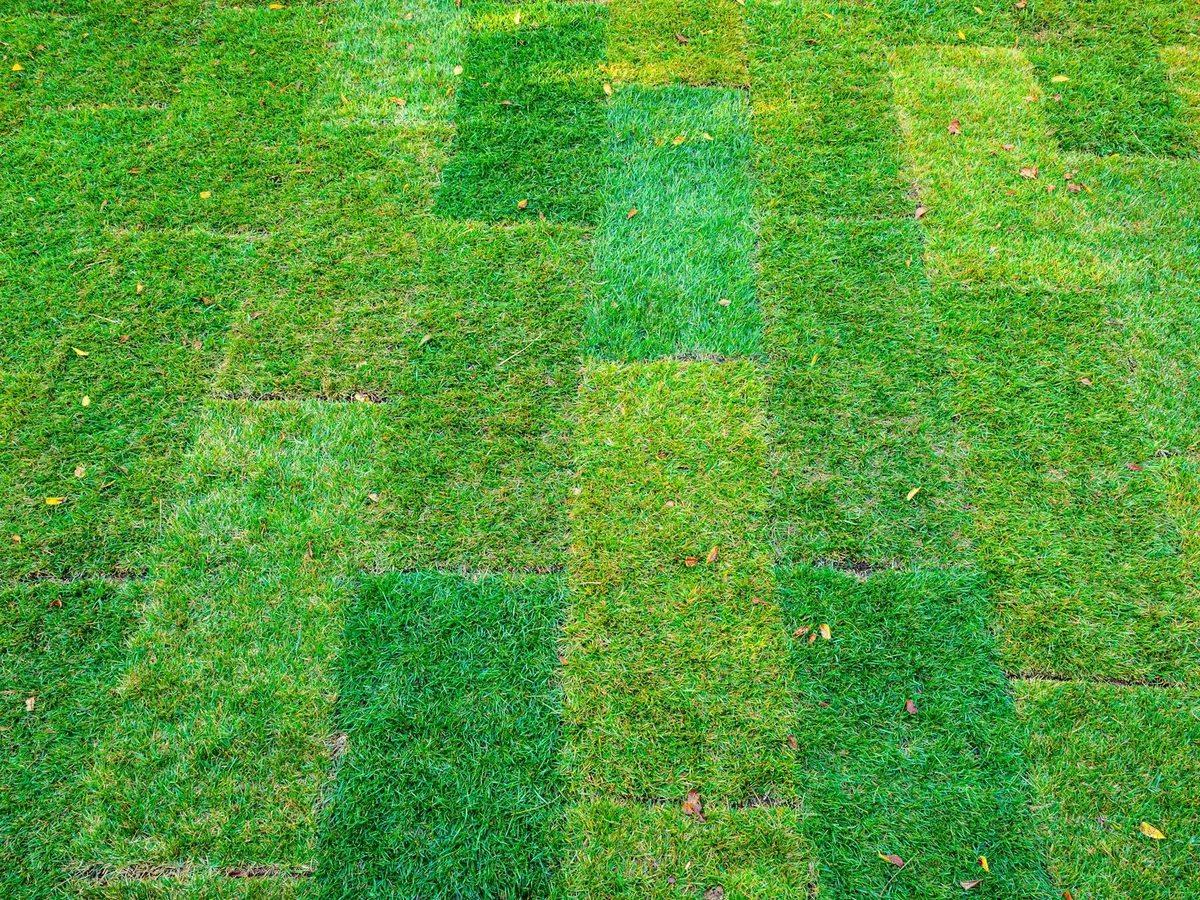
- Lay the sod the day it arrives. Pieces go down in a staggered brick pattern with edges pushed tight so no seams open up as it settles.
- Roll and water. Rolling presses the roots into contact with the soil, and the first soaking happens right away.
- Clean up and hand over. Scraps, pallets and old turf leave with us, and you get a written watering schedule for your address.
Sod Installation Grass Choices for Polk County Yards
The right grass is the one that matches your sun and your patience, not the one your neighbor has. Here is the short version. Each grass has its own page with the details.
| Grass | Sun it needs | Mowing height | Good fit for |
|---|---|---|---|
| Floratam St. Augustine | 6+ hours of direct sun | 3.5–4 in | Open, sunny front and back yards |
| Shade-type St. Augustine (CitraBlue, ProVista, Palmetto, Seville) | Partial shade to full sun | 3.5–4 in; Seville 2–2.5 in | Yards under oaks or beside tall houses |
| Empire zoysia | Full sun, some shade | 1.75–2.5 in | A dense, fine-bladed lawn you will mow often |
| Argentine bahia | Full sun | 3–4 in | Big lots, back acreage, tight budgets |
| Celebration bermuda | Full sun | 1–2 in | Play areas and a low, sports-style cut |
Torn between two? Our write-up on the best grass for Lakeland lawns weighs each one against sun hours, soil and budget.
Sod Installation Cost in Lakeland
Grass type sets the starting point, but the condition of the yard moves the final number just as much. A bare lot that only needs raking costs less per foot than a yard with a dead lawn to strip, ruts to level and sprinkler heads to raise. These are typical Lakeland-area ranges for 2026, not quotes.
| Job | Typical range | What moves the price |
|---|---|---|
| Bahia sod, installed | $1.00–$1.60 per sq ft | Lot size, how far pallets must be carried |
| Floratam St. Augustine, installed | $1.30–$2.00 per sq ft | Prep needed, total square footage |
| Shade-type St. Augustine, installed | $1.60–$2.50 per sq ft | Cultivar availability, small shaded sections |
| Empire zoysia, installed | $1.80–$2.80 per sq ft | Finish grading for a lower mowing height |
| Celebration bermuda, installed | $1.40–$2.30 per sq ft | Grade smoothness, edging along beds |
| Typical 1,000 sq ft Floratam job, no removal | $1,300–$2,000 | Soil amendments, access through gates |
| Old lawn removal and haul-off | $0.50–$1.25 per sq ft | Depth of roots and weeds, debris volume |
| Grading and leveling | $0.40–$1.50 per sq ft | How much soil is moved or brought in |
Your estimate turns those ranges into one fixed figure, with removal and grading on their own lines so you can see what each step costs. For worked examples, read how much sod costs in Lakeland.
Lakeland Sod Installation Under the 2026-27 Water Shortage
New sod is allowed right now. The Southwest Florida Water Management District has all of Polk County under a Modified Phase III order through March 31, 2027, and the order includes a 60-day establishment period for new plant material. The District's own advice is to hold off until the June rainy season if your schedule allows, because spring is the driest part of the year in this region.
- Normal lawns: one day a week by the last digit of the address. 0 or 1 waters Monday, 2 or 3 Tuesday, 4 or 5 Wednesday, 6 or 7 Thursday, 8 or 9 Friday.
- Hours: 12:01 to 4 a.m. or 8 to 11:59 p.m. A lot smaller than one acre gets a single window per watering day.
- Days 1–30 on new sod: daily if needed, within the permitted hours. The City of Lakeland also allows watering at any time on installation day.
- Days 31–60: three days a week. Even addresses water Tuesday, Thursday and Sunday; odd addresses Monday, Wednesday and Saturday.
- Zones: the extra days apply to a sprinkler zone only when new sod makes up 50 percent or more of it.
- Installation day: Lakeland lets you water a brand-new lawn at any time on the day it goes in. After that, keep sod watering inside the allowed night window; the before-8/after-6 hand-watering allowance covers beds and shrubs, not lawns.
Fitting several short sprinkler cycles into one night window during week one takes some planning, and we lay it out day by day in our Polk County new-sod watering guide.
Sod Installation Aftercare for the First 60 Days
- Stay off the mower until the sod has pegged down, usually 14 to 21 days. Tug a corner; if it lifts easily, wait.
- Skip the fertilizer. Sod is fed at the farm before harvest. UF/IFAS puts the wait at 30 to 60 days, and the county ordinance in Polk prohibits nitrogen and phosphorus for the first 30 days after sodding.
- Watch the seams and edges along driveways and sidewalks. They dry first, so set the nearest heads to reach them fully, and ask your utility before hosing them outside the allowed window.
- Expect the timing to show. Spring and early summer installs root fastest. Winter installs work but root slowly, and St. Augustine can go tan in a cold snap.
If a patch does start to fade, why new sod turns brown covers the usual causes. For the bigger picture on grass, prices and areas we cover, start with our main page on Lakeland sod, or ask for a free measure and we will put a fixed price on paper.