
Lakeland Pine Straw Installation Done Right
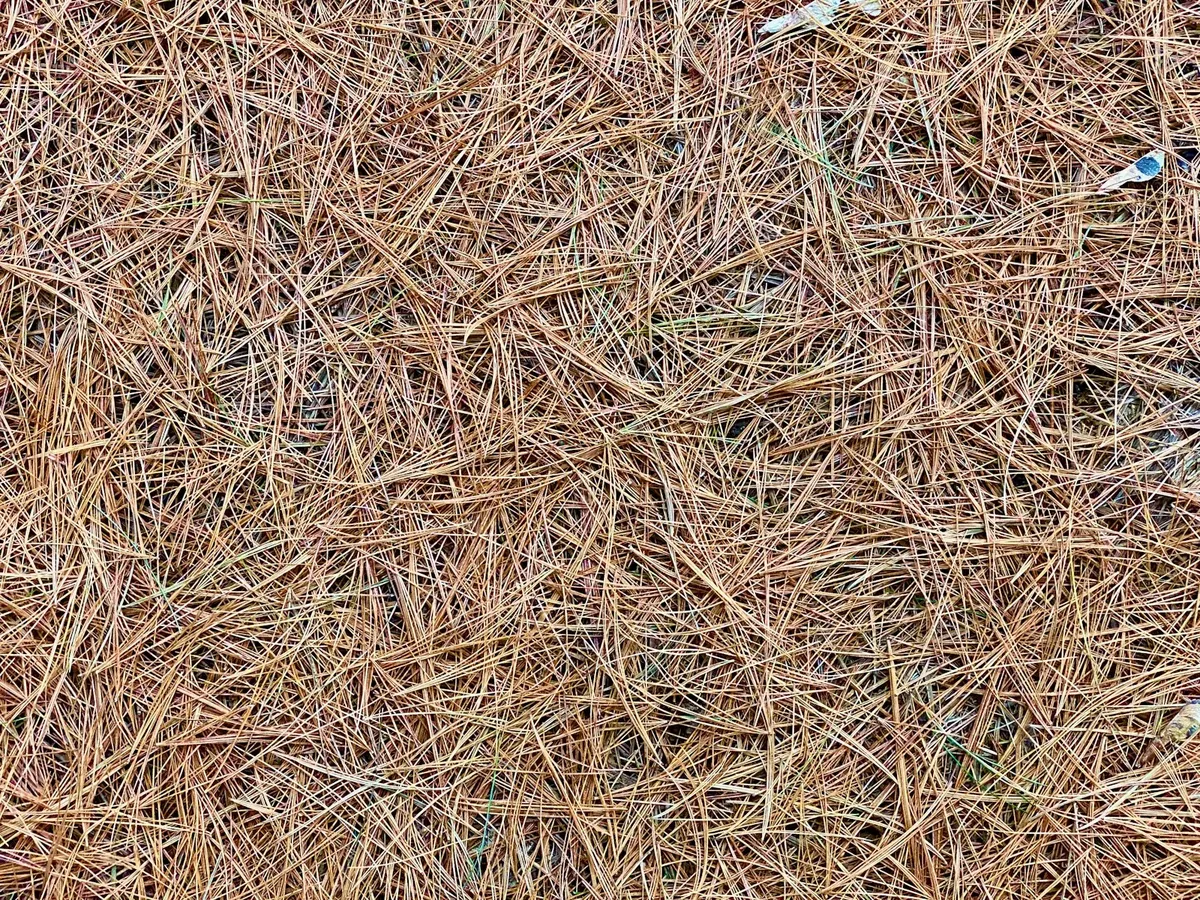
Pine straw is the dried needles of pine trees, baled and spread like mulch. It has been a standard bed cover in the South for a long time for a few practical reasons: it is light, it is cheap per square foot, and it stays where you put it. UF/IFAS Gardening Solutions describes it as one of the least expensive mulches and notes that the needles knit together, so it resists washing away better than loose material.
The tradeoff is that it breaks down and settles faster than bark or wood mulch, so it needs topping up more often. Whether that is a good deal depends on the bed. This page covers where pine straw earns its place, how many bales a job takes, and how we lay it so it looks finished instead of tossed.
Pine Straw Beds: Where They Work Best Around Lakeland
Slopes and banks
Loose bark nuggets float in a hard summer downpour and end up on the sidewalk. Pine straw mats down and holds. That makes it a strong choice for sloped beds, the banks along a driveway, and the edges of a retention pond or lake lot where the ground drops off. On the deep sand around Lakeland Highlands, where heavy rain moves loose material fast, that grip is the main reason to choose it.
Large beds and natural areas
Big island beds, wooded corners and the space under a stand of pines can swallow a lot of mulch. Because pine straw costs less to cover the same area, it lets you finish the whole space instead of picking which beds get done this year. It also looks natural under trees, where a bright dyed mulch can look out of place.
Wildflower and thin-cover areas
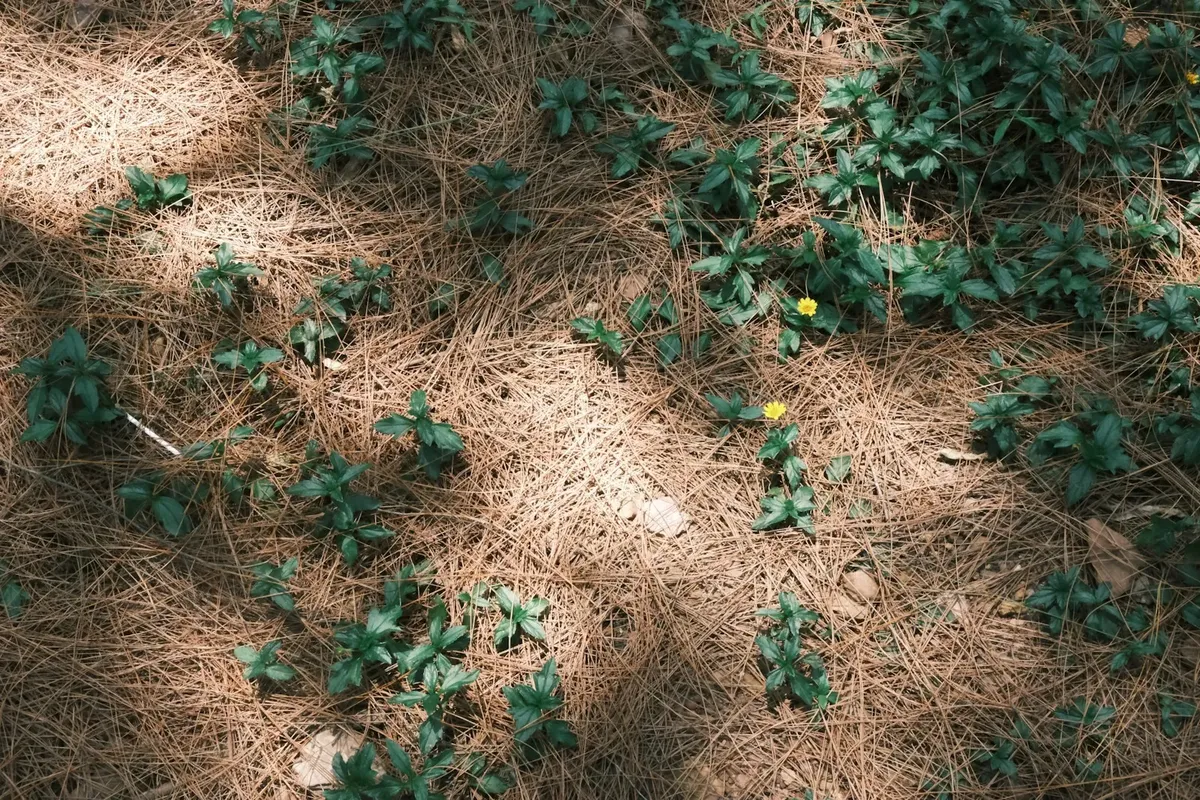
UF/IFAS notes that pine straw works as a good thin layer in wildflower areas, where a heavy mulch would smother reseeding plants. A light scatter keeps soil from crusting and drying without burying anything.
Where we'd pick something else
Formal front beds that you want to stay crisp for a long stretch, and beds that get blasted by a leaf blower every week, usually do better with pine bark or melaleuca. See mulch installation for those materials, or read the full comparison in pine straw vs. mulch in Florida.
Pine Straw Bale Count for Polk County Beds
Straw comes in bales, and bales vary in size and how tightly they are packed. A common rule of thumb is about 35 to 40 sq ft per bale at a 2 to 3 inch depth, with retail bales ranging from about 25 to 50 sq ft depending on thickness. That works out to roughly 25 to 30 bales per 1,000 sq ft. There is no university coverage chart for this, so treat it as a planning number and expect the final count to depend on the bales.
| Bed area | Bales at 35–40 sq ft each | Notes |
|---|---|---|
| 150 sq ft foundation strip | 4–5 | Narrow beds use a bit more for edge tucking |
| 400 sq ft front beds | 10–12 | Typical front yard |
| 1,000 sq ft of beds | 25–30 | Large lot or several island beds |
| 2,500 sq ft natural area | 63–72 | Wooded corner or under pines |
If your beds already have a decent layer of old straw, a refresh takes fewer bales, because we fluff and top up rather than starting from bare ground. Our mulch and pine straw calculator walks through measuring odd-shaped beds.
Pine Straw Installation, Bale to Tucked Edge
- Weed and clean. Weeds come out, and leaves and trash are cleared. Pine straw hides a lot, but it doesn't stop established weeds.
- Edge the beds. A cut edge between lawn and bed gives the straw something to tuck against.
- Shake out the bales. Each bale is broken apart and shaken loose so the needles land evenly, not in clumps.
- Spread to 2 to 3 inches. That matches the UF/IFAS depth guidance for beds. Thicker than 3 inches starts to shed water before it reaches roots.
- Clear trunks and the house. Straw stops roughly 12 inches short of tree trunks and big shrubs, sits a short gap away from small plants, and stays off the siding.
- Tuck the edges. Along the bed line, the straw is pushed down with a flat tool so the edge reads as a clean border.
- Blow off hard surfaces and haul away the bale twine and wrapping.
Pine Straw Upkeep: Keeping Beds Looking Fresh
Pine straw fades from reddish brown to gray as it weathers and slowly thins as the bottom layer breaks down into the soil. That breakdown is part of the benefit, since it adds organic matter to sandy beds. When the layer drops below about 2 inches or the soil starts showing through, top it up. Many people refresh once or twice a year, often before spring and again before the holidays, but the depth is a better guide than the calendar.
While the Modified Phase III water shortage order is in place (it runs through March 31, 2027), lawn sprinklers are limited to one day a week, and beds lean on hand watering, which the rules permit daily in the early morning or evening hours. A full layer of straw holds that water in the root zone longer. Your water utility or SWFWMD can confirm the order in effect for your address, and the regular year-round schedule takes over again when the District ends it.
Pine Straw Next to New Sod and in HOA Beds
Pine straw and a new lawn go in together on a lot of jobs. When they do, the sod goes down first, the bed edge is cut cleanly along it, and the straw is tucked to that line. Straw left lying over the edge of new sod shades the grass and keeps it from rooting at the margin, which is where new lawns are already most likely to dry out. If you are adding a lawn as well, see our sod installation page for how the two jobs are sequenced.
In deed-restricted neighborhoods, beds are often part of the architectural rules. Florida Statute 373.185 says an HOA can't prohibit Florida-friendly landscaping, and pine straw is a common Florida-friendly mulch. Associations can still require approval and set standards, so if your guidelines name a bed material, it is worth a quick check before the bales arrive.
Pine Straw Installation Cost in Lakeland
Installed pine straw is priced per bale, which covers the straw, delivery and spreading. Here are typical Lakeland-area ranges; your written estimate is the real number.
| Job | Typical range | What moves the price |
|---|---|---|
| Long-needle pine straw, installed | $7–$12 per bale | Bale count, slopes, edge tucking, weeding |
| Installed mulch (pine bark, eucalyptus, MSC-certified dyed) | $70–$130 per cubic yard | Material and bed prep |
| Mulch, delivered only (bulk) | $35–$65 per yard + $45–$100 delivery | Yards and distance |
For 1,000 sq ft of beds at 25 to 30 bales, pine straw installed runs about $175–$360. Covering the same area with mulch at 3 inches takes about 9.3 cubic yards, which at $70–$130 a yard installed is roughly $650–$1,210. The straw will need topping up sooner, but the gap leaves room for a refresh or two. For a smaller area you plan to spread yourself, bulk mulch delivery is the other low-cost option.
We lay pine straw across greater Lakeland and nearby towns, from bungalow beds near Lake Morton to larger lots out toward Polk City, often on the same trip as a new lawn. The homepage covers how we price Lakeland sod and bed work together. Send us your beds for a free bale count and a written price.