
Landscape Rock in Lakeland, FL: Where It Earns Its Keep
Rock is the one bed cover that never needs topping up. It doesn't rot, fade the way straw does, or wash off in a summer storm. That durability is real, and it is why people ask for it. But rock is not a better mulch in every spot, and UF/IFAS is direct about the limits. Getting a rock job right starts with putting it in the places where those limits don't matter.
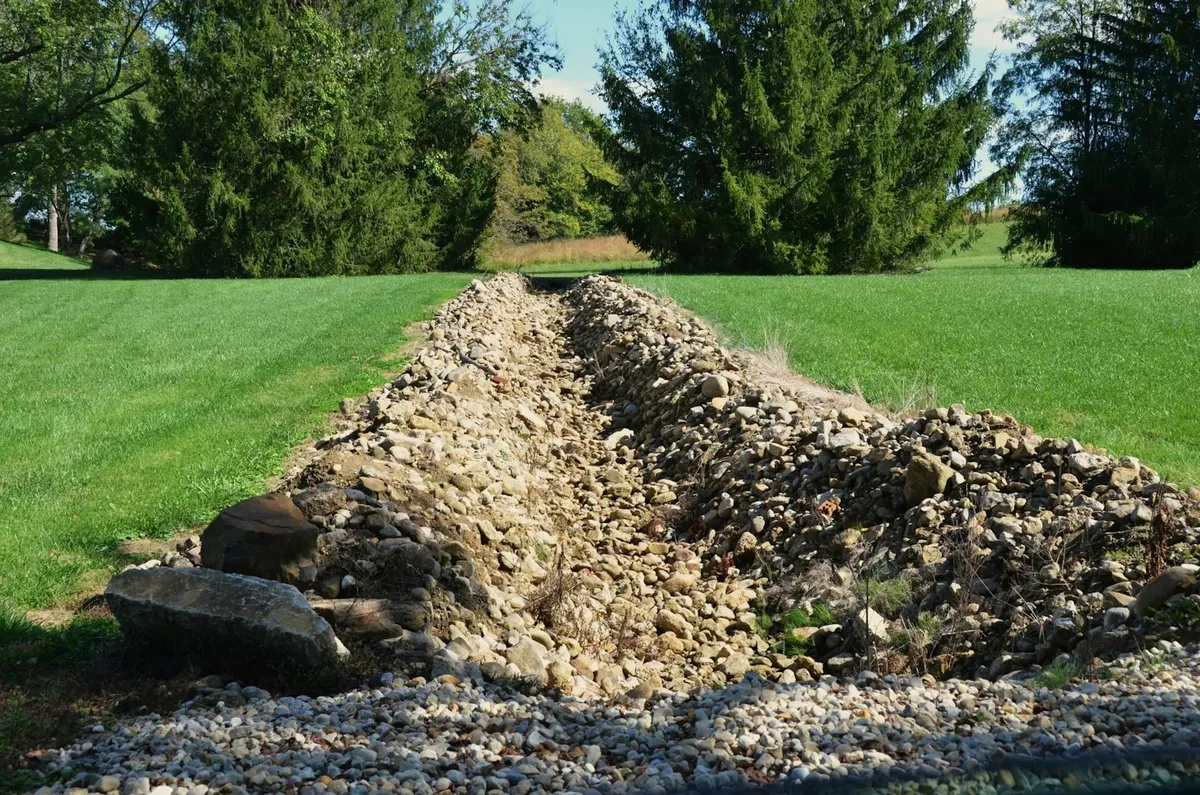
UF/IFAS Gardening Solutions says rock offers no nutrient or water-holding benefit, does a poor job with weeds and heat, and can migrate onto lawns. It reserves rock for pathways, dry creek beds and spots under downspouts. We would add a few close cousins of those uses:
- Downspout runs and splash zones. Roof water hitting bare sand digs a trench. A rock-lined channel spreads it out and carries it away from the foundation.
- Dry creek beds. A shallow rock swale that moves storm water across a yard looks deliberate in the dry months and works hard in the wet ones.
- Paths and stepping areas. Side-yard walkways, the route to the trash cans, the strip to the pool equipment.
- Narrow side yards between houses where turf can't get enough sun and gets trampled anyway.
- Around AC pads and utility boxes, where you want a clean, mow-free border.
Where rock usually disappoints is right around shrubs and young trees in full sun. It holds and reflects heat, it doesn't feed the soil the way an organic mulch slowly does, and leaves that drop into it are hard to rake out. For planted beds, mulch installation or pine straw installation is the better fit, and plenty of yards mix the two: mulch in the beds, rock in the drainage paths.
Lakeland Landscape Rock Types Compared
| Rock | Look | Practical notes |
|---|---|---|
| River rock | Smooth, rounded stones in tan, gray and mixed tones | Heavy and stable; the go-to for creek beds and downspout runs where water moves |
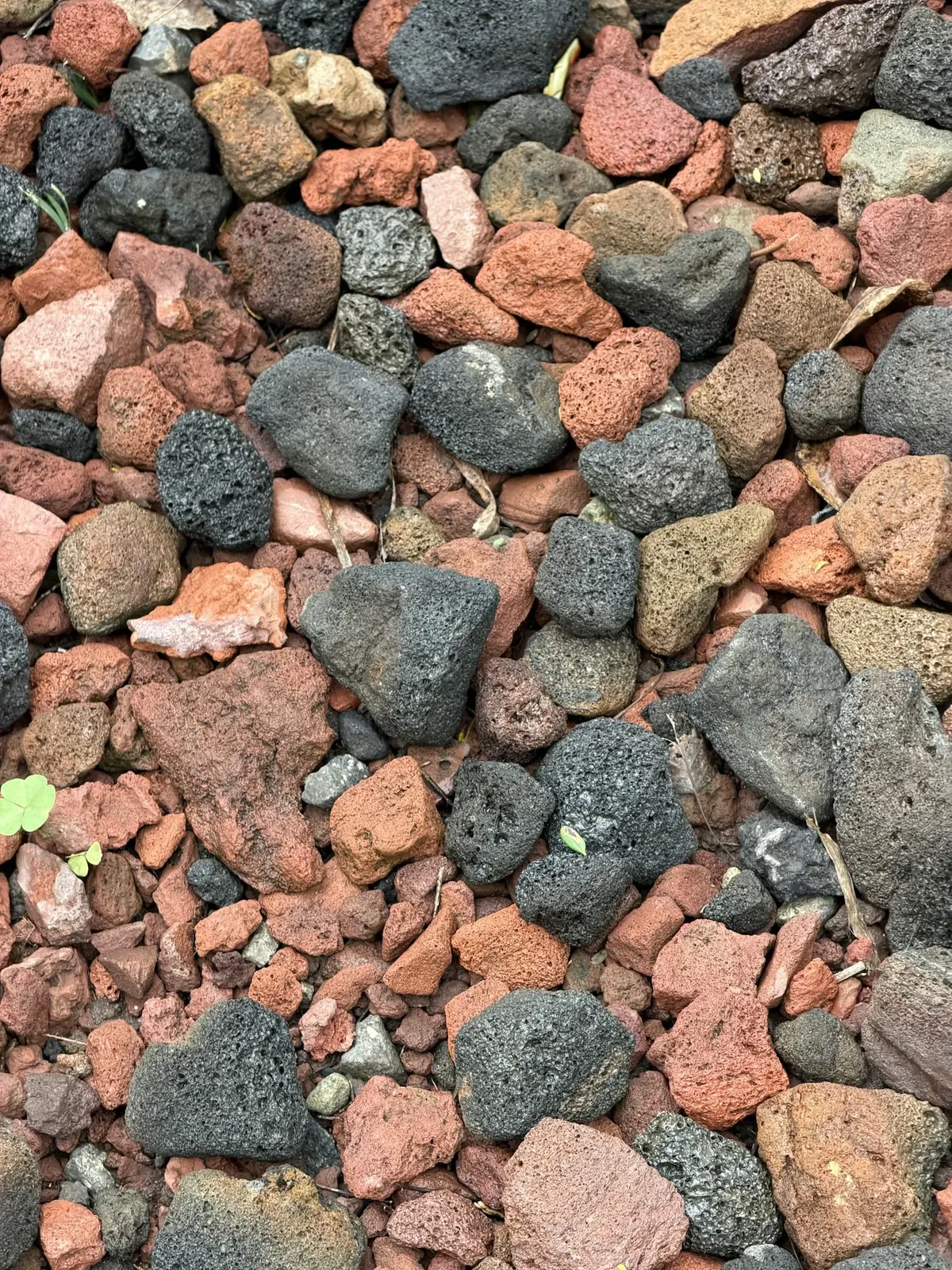
| Lava rock | Porous, rough, red or black | Much lighter per yard, so cheaper to move and spread; sharp edges, not for barefoot paths |
| Crushed shell | Bright white, coastal look | Durable; like any rock it adds nothing to the soil; edging needed to keep it out of the lawn |
River rock is sold and priced by the ton. Lava rock is usually sold by the cubic yard, because it weighs so much less for the same volume. That difference is why the two show up in different units on your estimate, and why a lava rock bed can cost less to install even when the material price looks similar.
Landscape Fabric Under Rock on Sandy Soil
On Lakeland's sandy soils, fabric is not optional under rock. UF/IFAS Gardening Solutions puts it plainly: lay landscape fabric before the rock, or the rock will sink into the sand. Without it, a nice layer of stone becomes a speckled patch of sand in a couple of years, and you end up buying the rock twice.
Fabric is not a weed force field, though, and we won't sell it as one. A UF/IFAS Extension article on landscape fabric notes that weed seeds blow in and sprout in the material on top of the fabric, and that perennial weeds such as torpedograss and purple nutsedge eventually grow through it. Soil and organic debris also fill the fabric's pores over time. The same article says fabric is best suited to paths and areas without ornamental plantings, which lines up with where rock belongs in the first place.
What keeps a rock bed clean in practice:
- Kill or dig out perennial weeds first. Torpedograss and nutsedge left under the fabric are the ones that come back through it.
- Overlap fabric seams generously and pin them down so sand can't push up between pieces.
- Install edging between rock and lawn so stones don't creep into the grass and the mower.
- Lay the rock deep enough to hide the fabric completely, since sunlight breaks fabric down where it shows.
- Blow leaves off a few times a year, before they rot into a seedbed on top of the fabric.
- Pull the occasional weed early, while it is rooted in the debris on top rather than through the fabric.
Rock Drainage Runs on Polk County Lots
A rock swale is often the simplest answer to a downspout that floods a bed or a low line where storm water crosses the yard. On deep ridge sand, like the higher ground around Lakeland Highlands, roof water soaks in quickly once it is spread out, so a short rock run can be all it takes. On flatter, slower-draining ground, like parts of north Lakeland near Lake Gibson, the rock run has to lead somewhere lower, and the yard's grade has to cooperate. If the slope is wrong, rock alone won't fix it; the lawn grading and leveling page explains how we set the fall first.
In older neighborhoods with big canopy trees, such as around Lake Hollingsworth, a rock path under the trees can replace turf that never got enough sun, while beds stay in mulch and the sunny parts of the yard stay in grass.
River Rock and Lava Rock Layouts That Age Well
Rock is permanent in a way mulch isn't, so the layout deserves a little more thought up front. Moving a few tons of stone later is a real job.
- Think about the mower. Gentle curves and straight runs are easy to mow along. Tight zigzags leave strips of grass you will be trimming by hand forever.
- Size paths for use. A route for the trash cans needs to fit the cans; a decorative path can be narrower.
- Follow the water. Dry creek beds should start where the water actually lands and follow the natural fall of the yard, not a line that just looks nice from the porch.
- Separate rock from mulch. Where a rock area meets a mulched bed, a strip of edging keeps the two from mixing into a mess after a few storms.
- Leave access. Irrigation valves, cleanouts and utility boxes should stay reachable without digging up stone.
Landscape Rock Cost in Lakeland
Installed rock prices include fabric and spreading. Use these typical Lakeland-area ranges for budgeting; they are not quotes. Edging is priced by the foot on your estimate.
| Job | Typical range | What moves the price |
|---|---|---|
| River rock, installed | $150–$260 per ton | Stone size and color, fabric and edging, how far it is wheeled |
| Lava rock, installed | $120–$260 per cubic yard | Color, depth, bed shape and access |
| Mulch, installed (for nearby planted beds) | $70–$130 per cubic yard | Material and bed prep |
| Grading / leveling (before a drainage run) | $0.40–$1.50 per sq ft | How much the slope needs to change |
| Old lawn removal & haul-off (turf to rock) | $0.50–$1.25 per sq ft | Area and removal method |
The biggest cost driver is access. Rock is heavy, and a backyard reached only through a narrow gate means every ton goes in by wheelbarrow. A front-yard downspout run next to the driveway is at the other end of the range. We measure and price the layout, the fabric, the edging and the stone as separate lines so you can adjust the plan.
Rock, mulch and lawn usually work best together, and we handle all three, along with sod in Lakeland and the surrounding towns. For a look at how rock compares with organic options in planted beds, read pine straw vs. mulch in Florida. When you are ready, request a free estimate and we will walk the yard and show you where rock makes sense.