Sod Removal and Replacement in Lakeland, FL: Is the Lawn Past Saving?
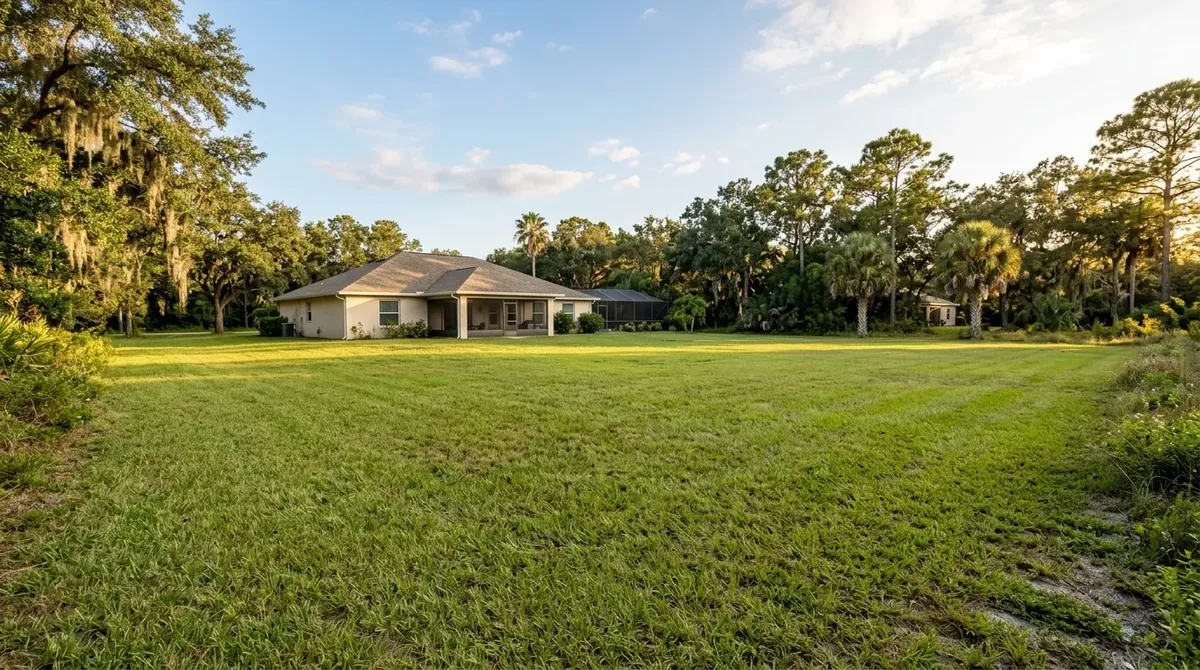
A few dead spots can be cut out and plugged with fresh pieces. A whole yard of thin grass, weeds and bare sand is a different job. Replacement makes sense when the problem covers most of the lawn, or when the grass itself is the wrong choice for the site. The goal of an estimate is to figure out which one you have before anyone rents a sod cutter.
These are the patterns that usually point toward a full replacement rather than spot repair:
- Floratam fading under trees. By UF/IFAS's count, Floratam won't hold on in spots that get under 6 hours of sun. If the oaks have grown in since the lawn went down, the grass will keep thinning no matter how it is watered or fed.
- Low, soggy areas full of dollarweed and sedges. UF/IFAS links continuously wet soil to both weeds. On flatwoods ground with a hardpan layer, that water sits right under the root zone.
- Irregular declining patches in deep sand. Deep sand is where sting nematodes thrive, and the patches they cause look a lot like drought stress. Only a lab assay confirms them, so it is worth testing before spending money on new sod.
- Chinch bug damage that comes back every year along driveways, sidewalks and other hot, dry strips, where the lawn has been treated and patched more than once.
- A rough, uneven surface that scalps under the mower and holds puddles, which is really a grading problem wearing a grass costume.
Here is the honest part. New sod will fail the same way the old lawn did if the cause stays in place. Shade, a wet low spot, nematode-heavy sand or high-pH fill under a new house all survive a sod swap. That is why the estimate covers the cause as well as the square footage. To play detective first, start with our list of reasons why new sod turns brown.
Lakeland Sod Removal: Sod Cutter or Herbicide Kill
UF/IFAS guidance on lawn replacement is blunt about one thing: don't lay sod over existing grass and weeds. Whatever is there has to come out or be killed first. There are two ways to do that, and the right one depends on what is growing and how soon you want the new lawn.
Cutting the old lawn out
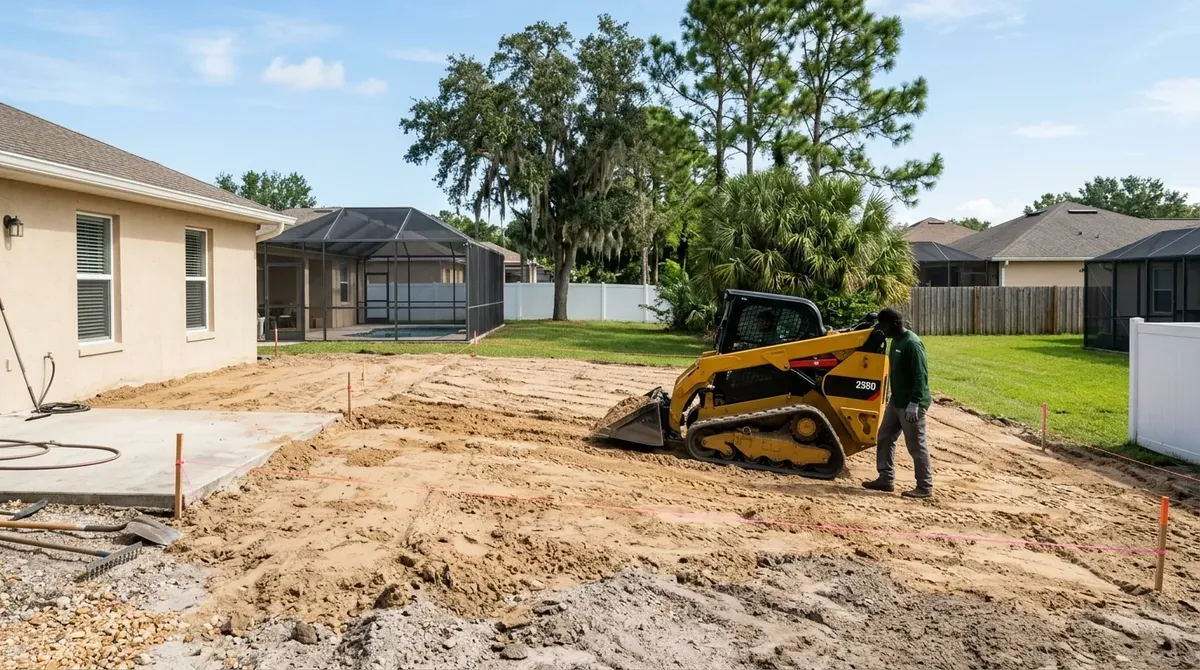
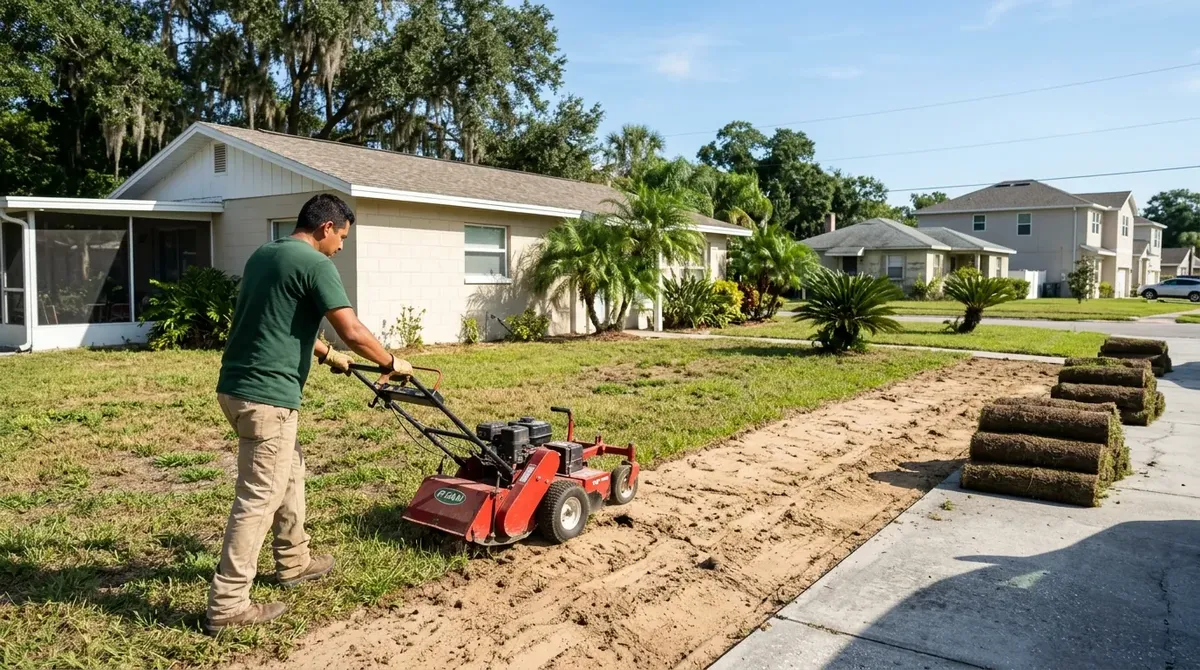
A sod cutter is a walk-behind machine that slices under the root mat and lifts the old turf in strips. The strips get rolled, loaded and hauled away, and the soil is ready for prep the same day. It is the fast option, and it takes the thatch, the weed crowns and the old grass with it. The tradeoffs: it removes a little topsoil along with the roots, so low areas may need fill afterward, and the hauled weight is a real part of the cost. Sprinkler heads and shallow lines need to be flagged first so the blade doesn't find them.
Killing it in place
The other route is a nonselective herbicide sprayed over the whole lawn, then a wait while it browns out, then the dead material is scraped up or worked into the soil. UF/IFAS notes that several applications may be needed for complete weed control. This method shines when the problem is a weed that spreads underground, because a cutter can leave root pieces behind that sprout through the new sod. The downsides are time and a brown yard for a few weeks, plus careful spraying near beds. The product label sets how long to wait before planting.
Lawn Replacement in Lakeland, Step by Step
Once the old lawn is gone, the work follows UF/IFAS site prep guidance, adjusted for what we find on your lot:
- Measure and test. We measure the area and recommend sending a soil sample to the county's UF/IFAS Extension office. UF's Hillsborough agents give a target pH of 6.5 to 7.5, and fill soil in new developments often runs high.
- Mark irrigation. Heads and lines get flagged before any digging, cutting or tilling.
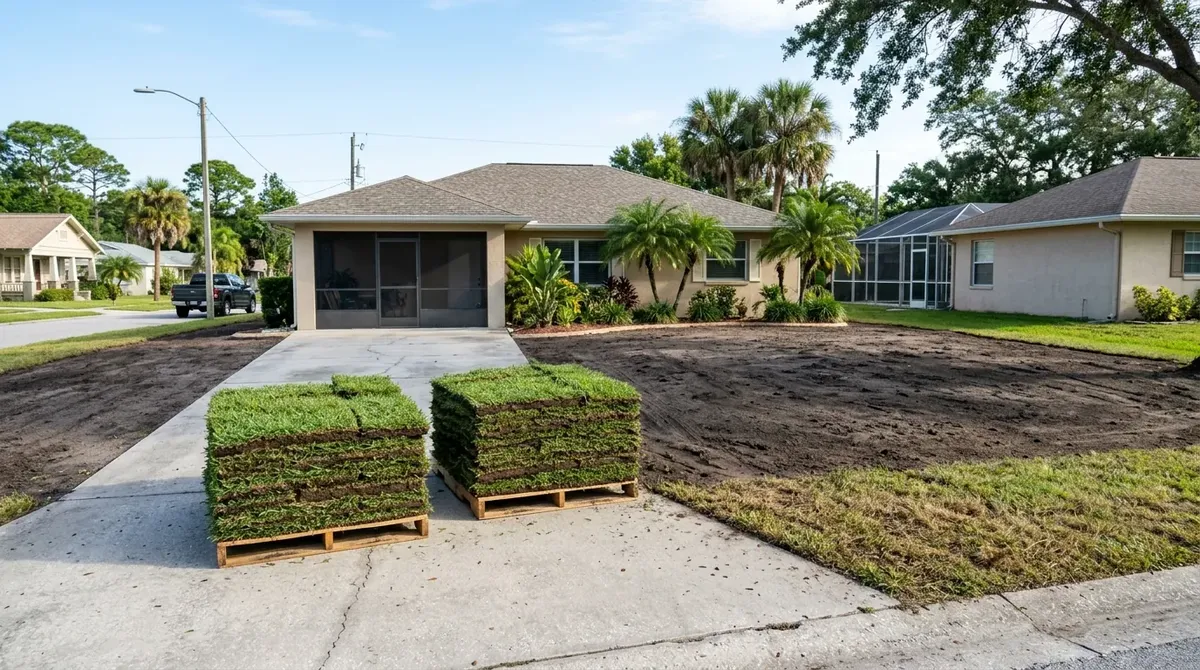
- Remove the old turf by cutter, herbicide or both, and haul it off.
- Correct the grade. UF/IFAS recommends a 1% to 2% fall away from the house or toward drains. Bigger problems get a full lawn grading and leveling pass.
- Loosen and amend. Compacted spots are tilled 6 to 8 inches deep, and organic matter goes in where the sand has almost none.
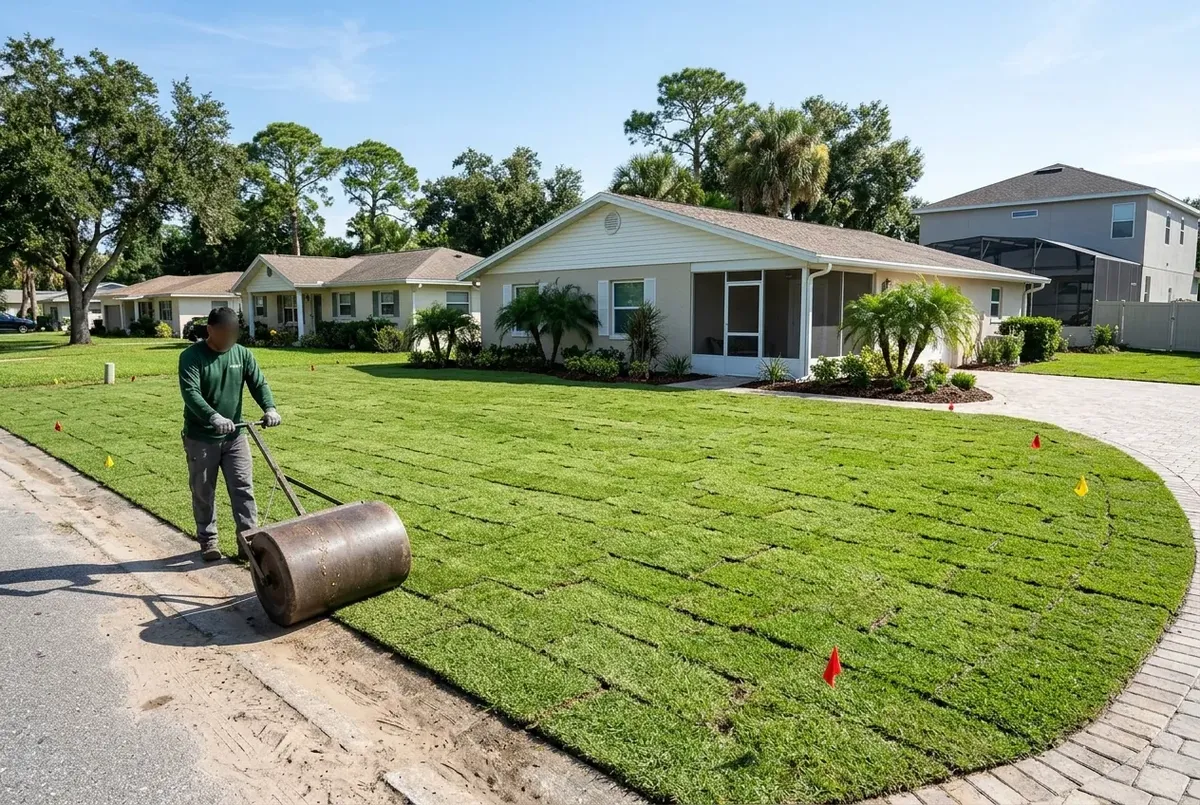
- Finish and roll. The surface is raked smooth and lightly rolled so a footprint sinks no more than about half an inch.
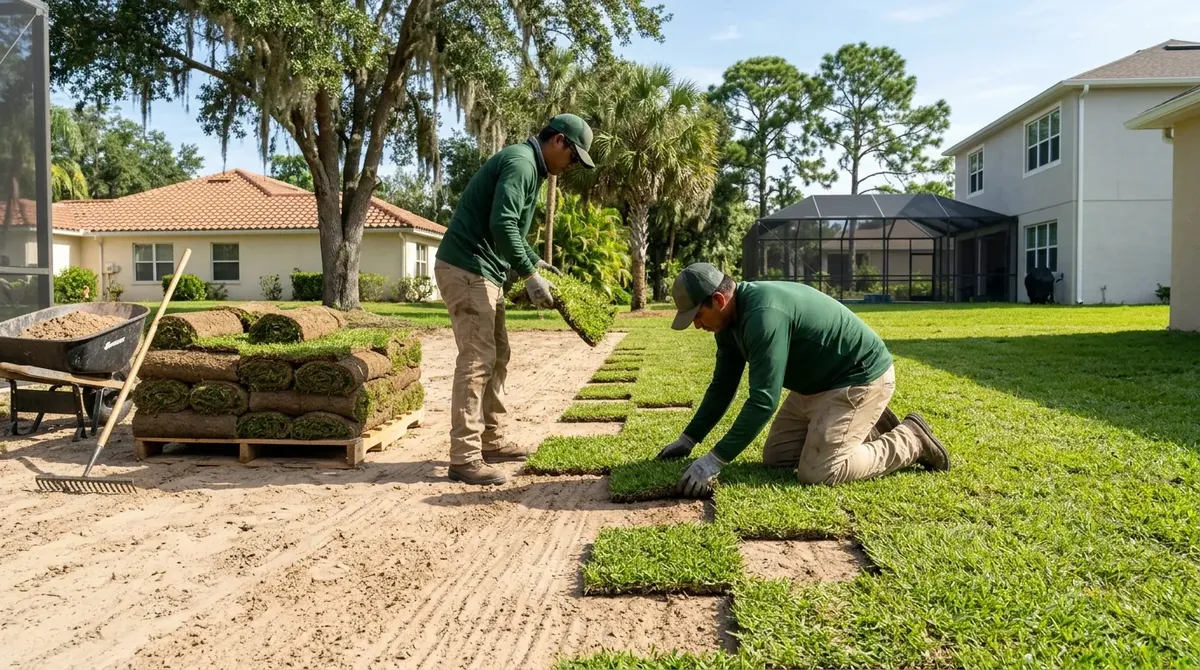
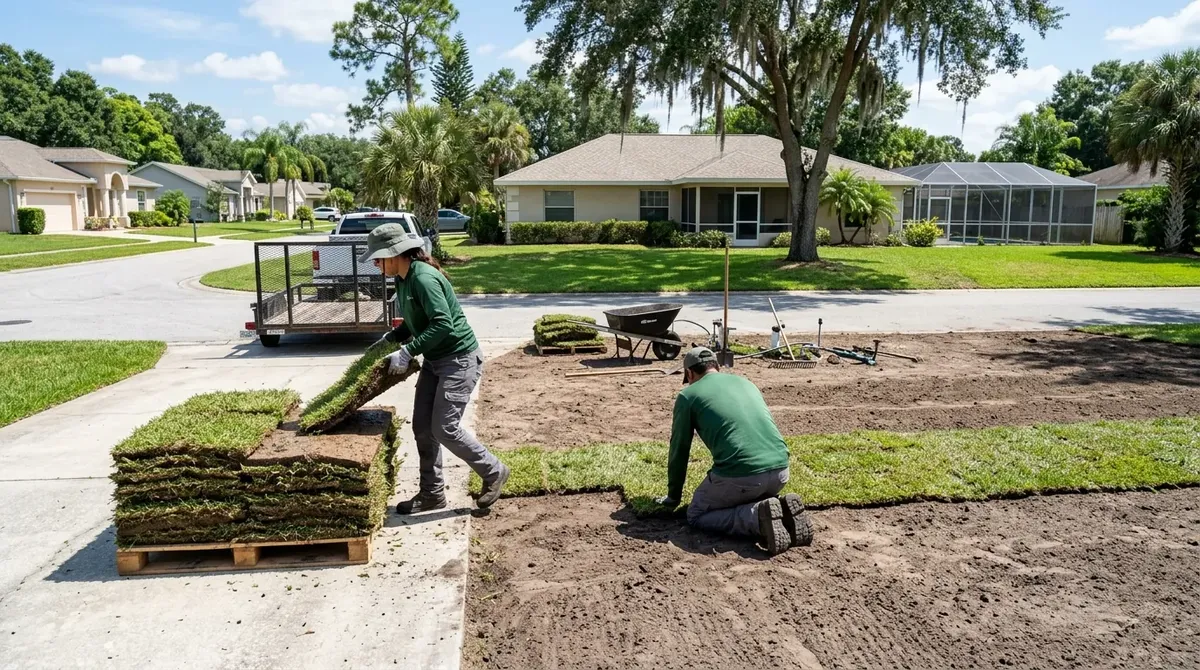
- Lay the sod on moist bare soil, offsetting each row like brickwork, butting the edges tight, then rolling and soaking it. Our sod installation page covers this part in detail.
- Clean up and hand over a written watering schedule and the dated invoice you will need under the current water rules.
Replacement Sod in Lakeland: Picking the New Grass
A replacement is the one moment you can change grass types without fighting the old lawn. Full-sun yards on the high sand around South Lakeland usually do well with Floratam. Yards under older oaks, like many around Lake Hollingsworth and Dixieland, are better matched to a shade-type St. Augustine sod such as CitraBlue or ProVista. Big back areas where low upkeep matters more than a carpet look are a fit for Bahia sod. For the sun-hour cutoffs grass by grass, read best grass for Lakeland lawns.
New Sod Replacement Watering Under the Phase III Order
Replacing a lawn is allowed under the Southwest Florida Water Management District's Modified Phase III order, which runs through March 31, 2027. If your timing is flexible, the District's FAQ points out that March, April and May are the driest stretch and that June rains make a better start. New sod gets a 60-day establishment allowance:
- Days 1–30: sprinklers may run on any day, but only in the 12:01–4 a.m. or 8–11:59 p.m. windows. Lots under an acre pick one of those windows, not both.
- Days 31–60: three set days a week. If your house number ends in an odd digit, that is Monday, Wednesday and Saturday; an even digit gets Tuesday, Thursday and Sunday.
- Paperwork: the City of Lakeland needs no permit or registration, but keep the dated receipt. SWFWMD and Polk County ask you to keep a written watering schedule.
- Installation day is the exception: Lakeland allows watering at any time on the day new sod goes in. The daily before-8/after-6 hand-watering allowance is written for beds and shrubs, not lawns.
One detail matters for partial replacements. A sprinkler zone only qualifies for the establishment schedule if at least 50% of it is new plant material. Replace a narrow strip inside a large zone and that zone stays on the one-day-a-week schedule, so the new sod gets only that zone's regular day. Plan zones before you replace part of a yard, or ask your utility how to water the patch. After the order lifts, the normal year-round schedule returns. Dates and details can shift, so confirm the current order with SWFWMD or your water utility. The day-by-day plan lives in our post on watering new sod in Polk County.
Sod Removal and Replacement Cost in Lakeland
A replacement price has three parts: getting the old lawn out, fixing the ground, and the new sod. The figures below are typical Lakeland-area ranges for planning, not quotes.
| Job | Typical range | What moves the price |
|---|---|---|
| Old lawn removal & haul-off | $0.50–$1.25 per sq ft | Cutter vs. herbicide, thickness of the mat, haul distance |
| Grading / leveling | $0.40–$1.50 per sq ft | How much fill is needed and how far it moves |
| Bahia sod, installed | $1.00–$1.60 per sq ft | Total area and access for pallets |
| Floratam St. Augustine, installed | $1.30–$2.00 per sq ft | Lawn size, gate width, number of beds to cut around |
| Shade-type St. Augustine, installed | $1.60–$2.50 per sq ft | Cultivar (CitraBlue, ProVista, Palmetto, Seville) and supply |
| Empire Zoysia, installed | $1.80–$2.80 per sq ft | Area, slopes and edging detail |
Worked through for a 1,000 sq ft Floratam front yard: removal at $500–$1,250 plus installed sod at $1,300–$2,000 comes to roughly $1,800–$3,250 before any grading. The sod cost guide for Lakeland has more examples, and the homepage explains how we price Lakeland sod jobs overall. Your estimate breaks each part onto its own line so you can see where the money goes.
If the lawn has been fighting you for years, a replacement done in the right order is usually the cheaper path over five years than another round of plugs and treatments. Ask for a free estimate and we will measure, look at the cause, and put the plan and price in writing.