
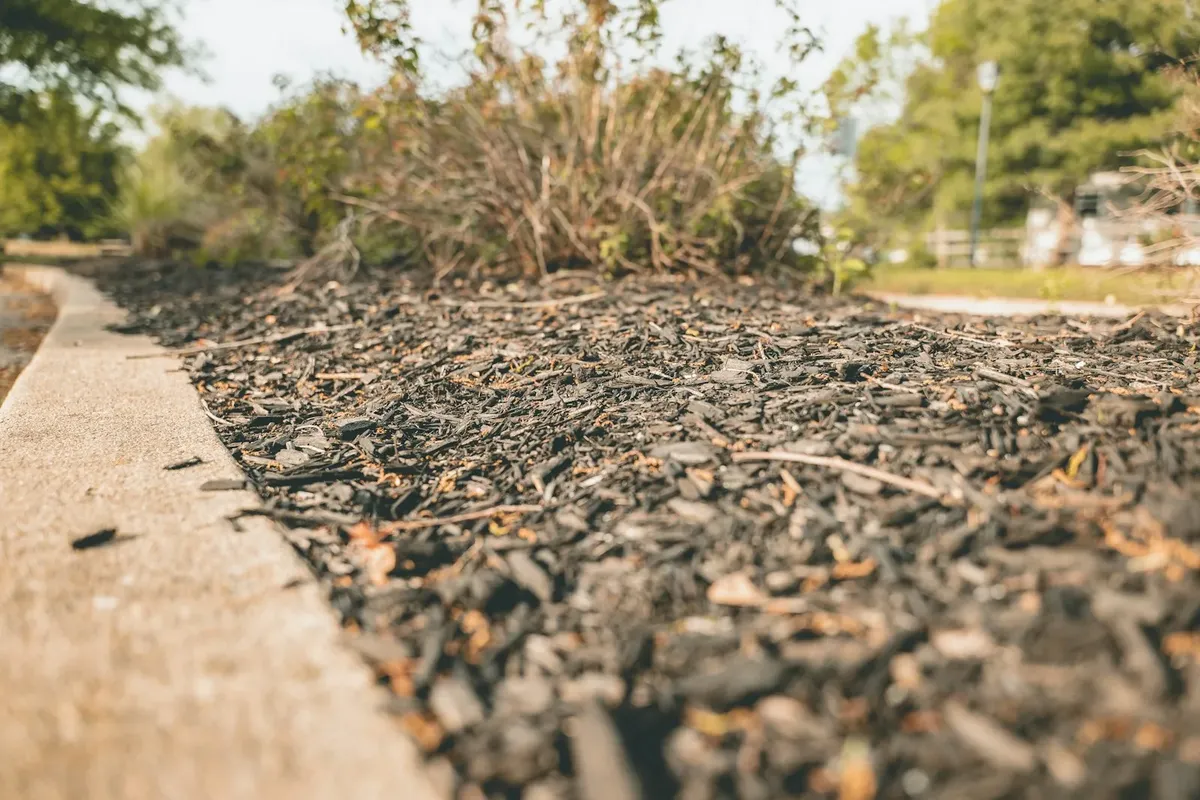
Ordering mulch is one of those jobs where a few minutes with a tape measure saves either a second trip to the store or a pile left rotting by the driveway. Below is the formula, a chart for common sizes, worked examples for the bed shapes you actually see around Lakeland homes, and the pine straw version of the same math.
How Much Mulch Do I Need: The Formula
The 324 comes from the fact that a cubic yard is 27 cubic feet, and 27 cubic feet spread 1 inch thick covers 324 square feet. You don't need to remember why. Just measure the area, pick a depth and run the numbers.
Measuring bed area by shape
- Rectangle or square: length x width.
- Circle: 3.14 x radius x radius. The radius is half the width across.
- Triangle: length of the base x height / 2.
- Curvy or kidney-shaped bed: measure the longest length, then take three or four widths along it and average them. Length x average width gets you close enough.
- Several beds: measure each one and add the areas together before you do the depth math.
Mulch Quantity Chart for Common Bed Sizes
| Bed area | Cubic yards at 2 in | Cubic yards at 3 in | Pine straw bales |
|---|---|---|---|
| 100 sq ft | 0.62 | 0.93 | about 3 |
| 250 sq ft | 1.54 | 2.31 | 7 to 8 |
| 500 sq ft | 3.09 | 4.63 | 13 to 15 |
| 1,000 sq ft | 6.17 | 9.26 | 25 to 30 |
| 2,000 sq ft | 12.35 | 18.52 | 50 to 60 |
Bulk suppliers usually sell in half-yard or whole-yard steps, so round up. A little extra is easy to use for topping off tree rings.
Mulch Calculator Examples for Lakeland Yards
Example 1: Foundation bed along a ranch home
A typical single-story home might have a bed running 60 feet along the front, 4 feet deep from the wall. That is 240 sq ft. At 3 inches: 240 x 3 / 324 = 2.22 cubic yards. Order 2.5 yards bulk, or 30 two-cubic-foot bags (240 sq ft x 0.25 ft = 60 cubic feet, divided by 2). If you want a thinner 2-inch layer to start, it drops to about 1.5 yards.
Example 2: Mulch ring around a shade tree
UF/IFAS wants tree rings at least 8 feet wide, out to the drip line when possible, and the mulch held roughly a foot away from a big tree's trunk. An 8-foot ring has a 4-foot radius: 3.14 x 4 x 4 = 50 sq ft. Leaving a clear circle about 3 feet across around the trunk takes off roughly 7 sq ft, so call it 43 sq ft. At 3 inches that is 0.4 cubic yards, about 11 cubic feet, or 5 to 6 bags.
Example 3: Topping up a bed that has broken down
UF/IFAS says to replenish when mulch falls below 2 inches and to add a top layer rather than strip out the old one. Say a 400 sq ft bed has about 1 inch left and you want to get back to 3. You are adding 2 inches: 400 x 2 / 324 = 2.47 cubic yards. Rake the old layer level first and check depth in a few spots with a ruler.
Example 4: Island bed in the front lawn
An oval island bed about 15 feet long, with widths of 10, 12 and 14 feet measured along it, averages 12 feet wide: 15 x 12 = 180 sq ft. At 3 inches, 180 x 3 / 324 = 1.67 cubic yards. Order 2 yards and use the extra on the walkway beds.
Bagged vs. Bulk Mulch in Lakeland
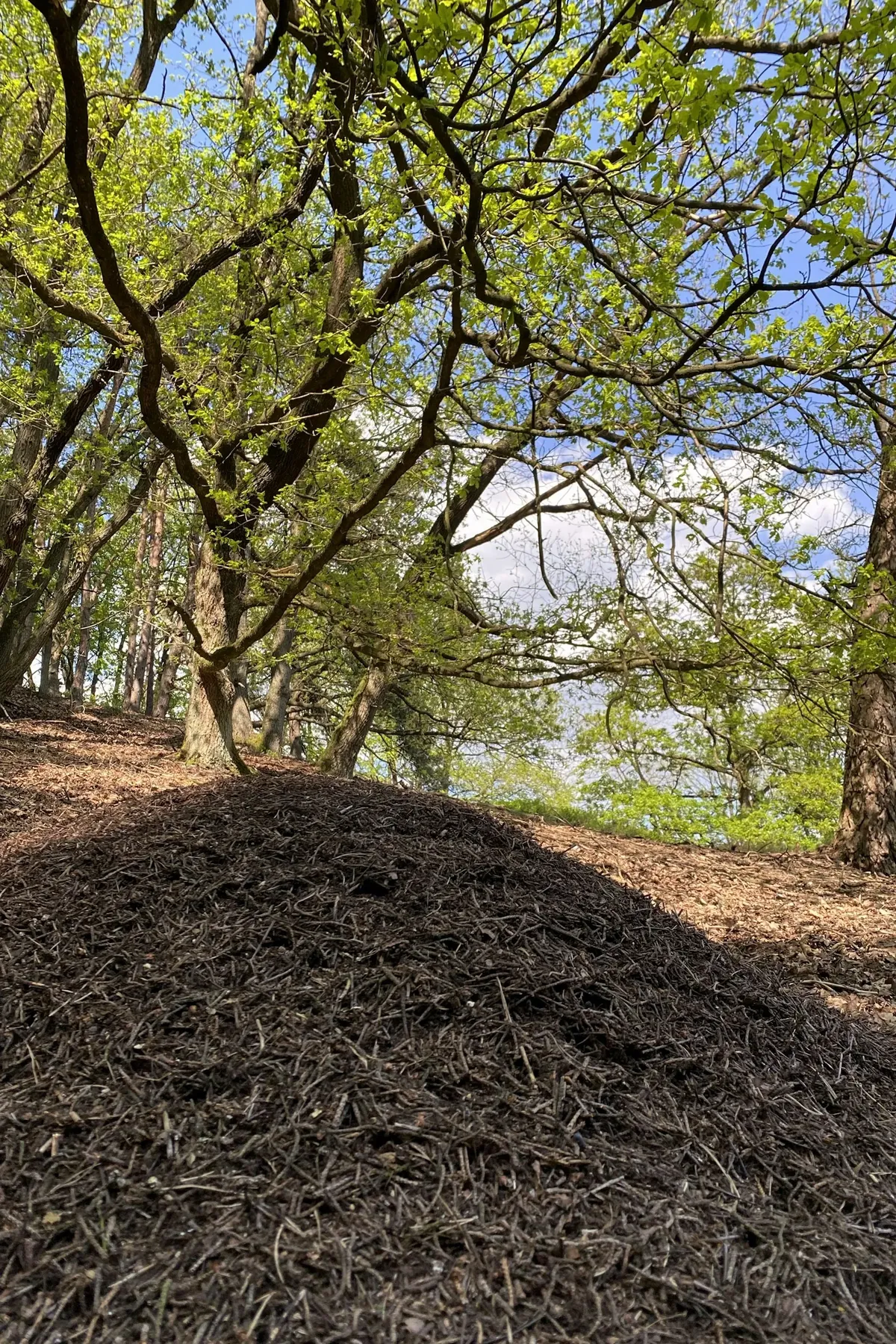
Most bagged mulch is sold in 2-cubic-foot bags, which means a cubic yard equals roughly 13.5 of them. LawnStarter estimates a yard of bagged mulch can cost around 35 percent more than the same yard bought in bulk. Bags make sense for one small bed or a quick touch-up. Past about two yards, bulk is usually cheaper and much less work to haul.
| Option | Typical Lakeland-area range | Example: 2.5 yards for the foundation bed above |
|---|---|---|
| Bulk mulch, delivered only | $35 to $65 per cubic yard, plus $45 to $100 delivery | About $135 to $265, you spread it |
| Mulch, installed | $70 to $130 per cubic yard | About $175 to $325, spread and edged |
| Pine straw, installed | $7 to $12 per bale | Same 240 sq ft: about 6 to 7 bales, $42 to $84 |
These are typical ranges, not quotes. Installed pricing covers spreading, edging and cleanup. Our mulch delivery page explains bulk drop-offs, and mulch installation covers the full job.
How Many Bales of Pine Straw Do I Need?
Pine straw is sold by the bale, not the yard, and bale size varies a lot. A common rule of thumb puts one bale at about 35 to 40 sq ft when spread 2 to 3 inches deep. Scaled up, that is 25 to 30 bales for every 1,000 sq ft. Retail bales range from about 25 to 50 sq ft of coverage depending on how tightly they are packed, so check the bale before you trust the count. No university extension chart for bale coverage exists that we could find, so treat this as a planning number.
- Measure the bed area the same way you would for mulch.
- Divide by 40 for a looser estimate and by 35 for a fuller one.
- Round up. A 600 sq ft bed under pines comes out to 15 to 18 bales.
- Fluff the straw as you spread it, and tuck the edges so they stay off walkways.
Our pine straw installation crews price by the bale. If you are torn between the two materials, read pine straw vs. mulch in Florida.
Common Mulch Measuring Mistakes
- Measuring the lot instead of the beds. Only the bed area matters. Skip the lawn, walks and any rock zones.
- Forgetting what is already there. A bed with 1.5 inches left only needs about 1.5 more to reach 3 inches, which cuts the order in half.
- Counting tree rings twice. If a ring sits inside a bed you already measured, it is already in the total.
- Buying bags for a big job. Thirty or more bags is usually the point where bulk delivery saves money and a lot of lifting.
- Ordering to the full 3 inches around small plants. New annuals, seedlings and herbs only want about an inch, so measure those areas separately.
Mulch Depth Rules From UF/IFAS
- 2 to 3 inches for trees, shrubs and established beds.
- About 1 inch around seedlings, vegetables and herbs.
- Never more than 3 inches. Deeper layers block rain and irrigation from reaching the roots.
- Keep it off trunks. About a foot back from large trees, a couple of inches from small plants. A mulch volcano piled against the trunk invites rot and rodents.
- Keep it back from the house. Florida soil already has termites, and UF/IFAS says mulch doesn't bring them, but damp soil against the foundation isn't helpful. Leave a gap.
That 3-inch cap is why the formula matters. Overbuying usually leads to piling it on too thick. With watering limited under the current water shortage order, a properly mulched bed also holds moisture between your allowed days.
Mulch Ordering Tips for Polk County Homeowners
- Measure every bed before you call, and note how much old mulch is left.
- Pick where the pile goes. A tarp on the driveway protects the concrete and makes cleanup easy.
- Pull weeds before mulch goes down. Mulch slows new weeds; it doesn't kill the old ones.
- Plan around rock areas. UF/IFAS reserves rock for paths, dry creek beds and under downspouts, so measure those separately for landscape rock.
- Older homes with tight beds, like the bungalows around Lake Morton, often need less than owners expect. Measure first.
If you would rather skip the tape measure, we measure beds for free during an estimate and hand you a fixed written price. Mulch and pine straw jobs are part of the same work we do for sod in Lakeland, and small jobs of a few yards are welcome. Request a quote.